The Truth About Collagen Loss After 40
"We often think aging begins when we notice it in the mirror. In reality, it begins quietly, years before we can see it."

Most conversations about aging focus on wrinkles.
But wrinkles are often the result, not the cause.
The more important story is happening beneath the surface, where the architecture of the skin slowly changes over time. Understanding that process is one of the most empowering things you can do for your skin.
Collagen: Your Skin's Internal Framework
Imagine your skin as a beautifully designed building.
The glow you see on the outside is only as strong as the framework supporting it from within.

That framework is made largely of collagen, elastin, healthy fat compartments, muscles, bone support, and an intricate network of blood vessels and connective tissue working together in remarkable harmony.
Collagen is the primary structural protein responsible for firmness, resilience, and the ability of skin to recover after smiling, laughing, or expressing emotion.
When we are young, our bodies continuously produce new collagen while removing older fibers. The system remains beautifully balanced.
After our 30s—and especially after 40—that balance gradually shifts.
What Really Happens After 40?
By the fourth decade of life, collagen production naturally slows.
Fibroblasts—the specialized cells responsible for manufacturing collagen—become less active. Existing collagen fibers become thinner, less organized, and more fragmented. Elastin also begins to lose its elasticity, while hydration and the skin's ability to repair itself gradually decline.
For women, menopause accelerates these changes dramatically.
Research suggests that women may lose up to 30% of skin collagen during the first five years after menopause, followed by a continued decline of approximately 2% each year thereafter. |
These changes don't happen overnight.
They accumulate slowly until one day many people notice that they "suddenly" look older.
In reality, the process has been unfolding quietly for years.
The Signs Are More Than Wrinkles
When collagen declines, skin doesn't simply wrinkle.
Its entire structure begins to change.
You may notice:
Skin that feels thinner
Loss of firmness around the jawline
Cheeks that appear less supported
Fine lines becoming more visible
Slower healing after treatments
More crepey texture
Enlarged pores
A face that simply looks more tired despite feeling well
Many people describe this as looking like they have "lost volume."
Often, what they are actually seeing is the gradual loss of structural support.
Why Skin Aging Is About More Than Skin
One of the biggest misconceptions in aesthetics is that aging occurs only in the skin.
In reality, the face ages as a complete system.

Bone remodeling changes facial support.
Fat compartments shift and shrink.
Facial muscles weaken or become imbalanced.
Blood circulation becomes less efficient.
Inflammation, oxidative stress, hormones, sleep quality, nutrition, exercise, and overall metabolic health all influence how quickly these changes occur.
This is why two people of the same age can look remarkably different.
Chronological age tells only part of the story.
Biological aging tells the rest.
Can We Stop Collagen Loss?
No.
Collagen loss is a normal part of being human.
But the speed at which it occurs—the velocity of skin aging—is influenced by many factors that are within our control.
Some of the most important include:
Consistent sun protection
Quality sleep
Adequate protein intake
Regular resistance exercise
Avoiding smoking
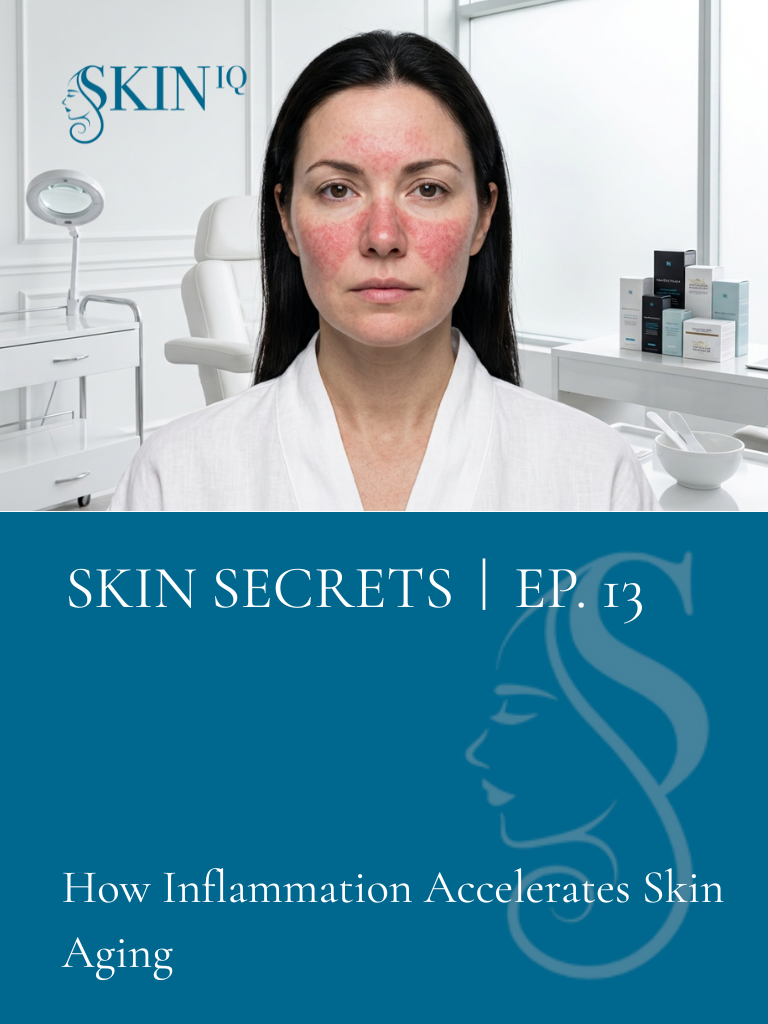
Managing chronic inflammation
Hormonal balance when appropriate
Strategic skin care
Evidence-based collagen stimulation treatments

Rather than trying to erase every wrinkle, the goal becomes supporting the skin's natural ability to remain healthy, resilient, and structurally strong for as long as possible.
The New Conversation Around Beauty
For years, aesthetic medicine has largely focused on correction.
Today, the conversation is gradually shifting toward preservation.
Instead of asking:
"How do I fix what I see?"
Many people are beginning to ask:
"How do I slow the changes before they become significant?"
That subtle shift in thinking changes everything.
Healthy skin isn't simply smoother skin.
It is skin with strong foundations.
A Structural Way of Thinking
At Skin IQ, we often describe the face as a living structure rather than simply a surface.
When evaluating skin, we don't look only at texture or pigmentation. We also consider the deeper systems that influence how the face ages over time—its structural support, muscular balance, skin quality, and the many internal factors that affect collagen production and tissue resilience.
This broader perspective helps explain why no single cream, laser, injectable, or supplement is ever the complete answer.
Healthy aging is rarely about finding one miracle solution.
It is about making many thoughtful decisions that work together over time.
The Bottom Line
Collagen loss after 40 is inevitable.
Rapid collagen loss is not.
Every healthy habit, every intelligent treatment, every restorative night of sleep, every walk, every strength workout, every nourishing meal, and every decision that reduces unnecessary inflammation contributes to the same goal:
Supporting the remarkable architecture your body has spent a lifetime building.
Because the future of aesthetics isn't about chasing youth.
It's about preserving vitality.
And perhaps the most beautiful skin is not the skin that looks twenty-five forever—but the skin that continues to reflect health, strength, and life at every age.


Comments